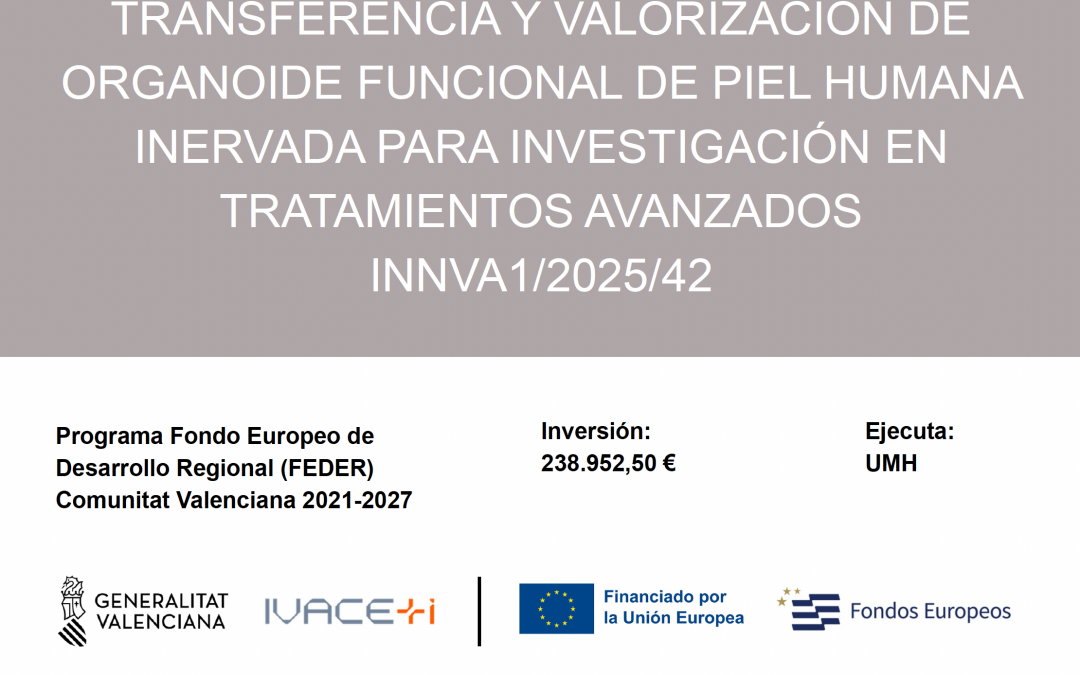
Our center has been awarded funding for the TRAVIATA project, a strategic initiative aimed at improving the clinical translation of preclinical research results through the use of advanced human microphysiological models.
The limited predictive capacity of many animal models in biomedical research highlights the need to develop human experimental systems with greater clinical relevance, capable of improving disease diagnosis, prognosis, and treatment. In this context, human organoids and organ-on-chip technologies represent a key tool for advancing toward a more precise, personalized, and sustainable medicine, while also contributing to the reduction of animal experimentation.
The main objective of the TRAVIATA project is to increase the technology readiness level (TRL) of a human skin organoid innervated with sensory neurons (nociceptors) developed at IDiBE, by integrating it into a neurosensory functional organ-on-chip microphysiological system.
This model will enable more accurate studies of sensory perception, pain, irritation, and toxicity, with direct applications in:
-
Biomedical preclinical research
-
Safety and efficacy assessment in the cosmetic industry
-
Testing of toxic and irritant substances
Research using this type of microphysiological system enhances the clinical translation of results, promotes the development of personalized medicine, and opens new opportunities for the creation of high value-added products and services.
The TRAVIATA project also includes a technology transfer plan aimed at valorising the prototype developed at IDiBE. This strategy facilitates the transfer of scientific knowledge generated at our institute and reinforces IDiBE’s commitment to translational research with economic, social, and health impact.
This project has received funding from the European Union through FEDER funds, contributing to the strengthening of the R&D&I ecosystem and the development of innovative technologies that improve public health and quality of life.
We sincerely thank everyone involved in making this project possible.
Our center has been awarded funding for the TRAVIATA project, a strategic initiative aimed at improving the clinical translation of preclinical research results through the use of advanced human microphysiological models.
The limited predictive capacity of many animal models in biomedical research highlights the need to develop human experimental systems with greater clinical relevance, capable of improving disease diagnosis, prognosis, and treatment. In this context, human organoids and organ-on-chip technologies represent a key tool for advancing toward a more precise, personalized, and sustainable medicine, while also contributing to the reduction of animal experimentation.
The main objective of the TRAVIATA project is to increase the technology readiness level (TRL) of a human skin organoid innervated with sensory neurons (nociceptors) developed at IDiBE, by integrating it into a neurosensory functional organ-on-chip microphysiological system.
This model will enable more accurate studies of sensory perception, pain, irritation, and toxicity, with direct applications in:
-
Biomedical preclinical research
-
Safety and efficacy assessment in the cosmetic industry
-
Testing of toxic and irritant substances
Research using this type of microphysiological system enhances the clinical translation of results, promotes the development of personalized medicine, and opens new opportunities for the creation of high value-added products and services.
The TRAVIATA project also includes a technology transfer plan aimed at valorising the prototype developed at IDiBE. This strategy facilitates the transfer of scientific knowledge generated at our institute and reinforces IDiBE’s commitment to translational research with economic, social, and health impact.
This project has received funding from the European Union through FEDER funds, contributing to the strengthening of the R&D&I ecosystem and the development of innovative technologies that improve public health and quality of life.
We sincerely thank everyone involved in making this project possible.