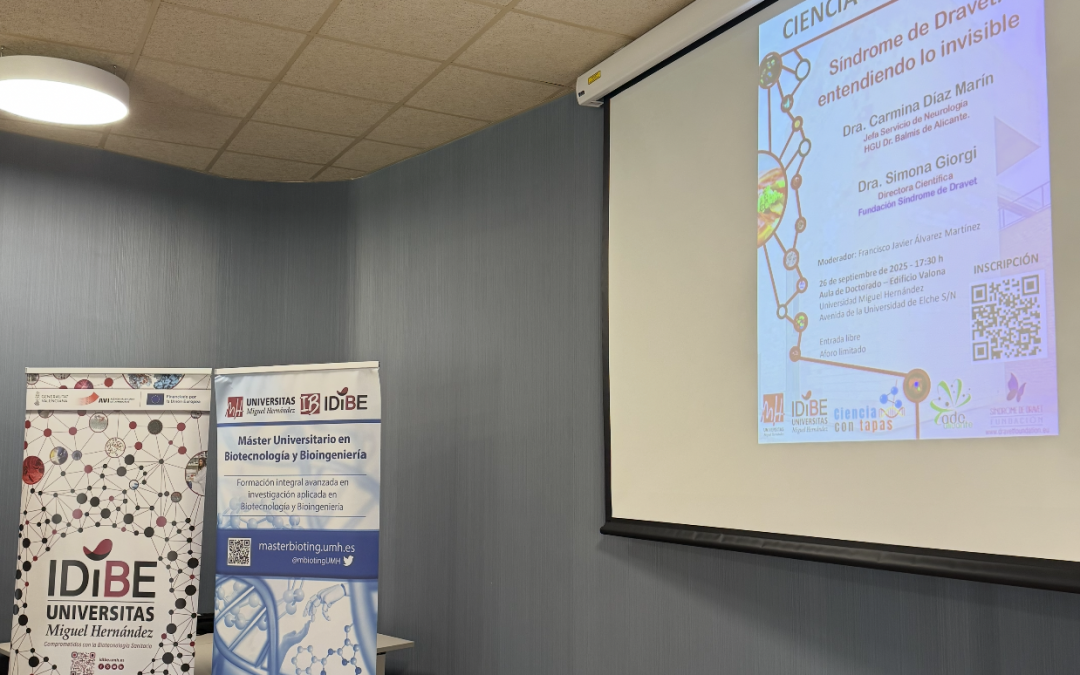
September 26, 2025
“Dravet Syndrome: Understanding the Invisible”
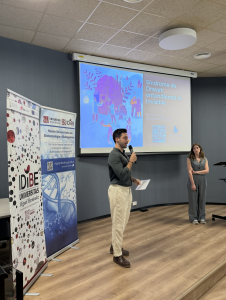
As part of the European Researchers’ Night within FECITELX 2025, the Institute for Research, Development and Innovation in Healthcare Biotechnology of Elche (IDiBE–UMH) organized a new edition of Science with Tapas last Friday, September 26, at the La Valona building on the Elche Campus, with a large number of attendees.
The event was presented and moderated by Dr. Francisco Javier Álvarez Martínez, researcher at IDiBE. The invited speakers were Dr. Carmina Díaz Marín, Head of the Neurology Department at Dr. Balmis General University Hospital of Alicante, and Dr. Simona Giorgi, Scientific Director of the Dravet Syndrome Foundation.
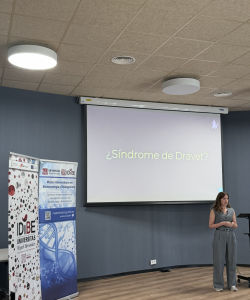
Dr. Giorgi began her talk by showing a video in which families of patients shared their experiences with the disease. She went on to define Dravet Syndrome as a developmental and epileptic encephalopathy that usually appears between 4 and 8 months of age, and also causes cognitive and motor impairments. She explained the challenges of developing advanced therapies targeting the SCN1A gene, which presents numerous mutations and a large size, as well as the difficulties of different routes of administration and the heterogeneity among patients.
Among the most advanced therapies, she highlighted Zorevunersen, a drug currently in phase 3 clinical trials, which has shown a reduction in epileptic seizures, and ETX101, an epigenetic therapy now in phase 1/2. To conclude, she shared some information about the Dravet Syndrome Foundation, where she currently works.
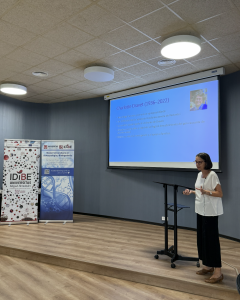
For her part, Dr. Díaz discussed the prevalence of the disease and the parameters used to evaluate epileptic patients, such as clinical history, electroencephalogram, neuroimaging, and genetic studies. She noted that the disorder is named after the French neurologist Charlotte Dravet. In addition to epilepsy, she emphasized the importance of addressing behavioral issues, cognitive and language impairments, and the need for early and accurate diagnosis.
Regarding pharmacological treatment, Dr. Díaz underlined the importance of acting quickly to control seizures, using antiepileptic drugs such as cannabinoids and valproate combined with clonazepam. She also mentioned non-pharmacological treatments like the ketogenic diet, vagus nerve stimulation in adults, and behavioral, motor, and speech therapy. Finally, she stressed the importance of providing comprehensive support to families.
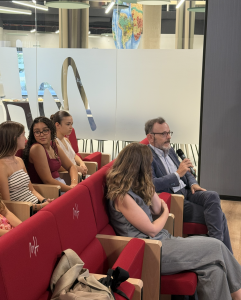
Afterwards, a lively Q&A session took place, with many questions and active participation from the audience.
The evening concluded, as is tradition, with a tasting of tapas and drinks, fostering an informal exchange between speakers and attendees.
By Mª José Martínez (September 29, 2025)