
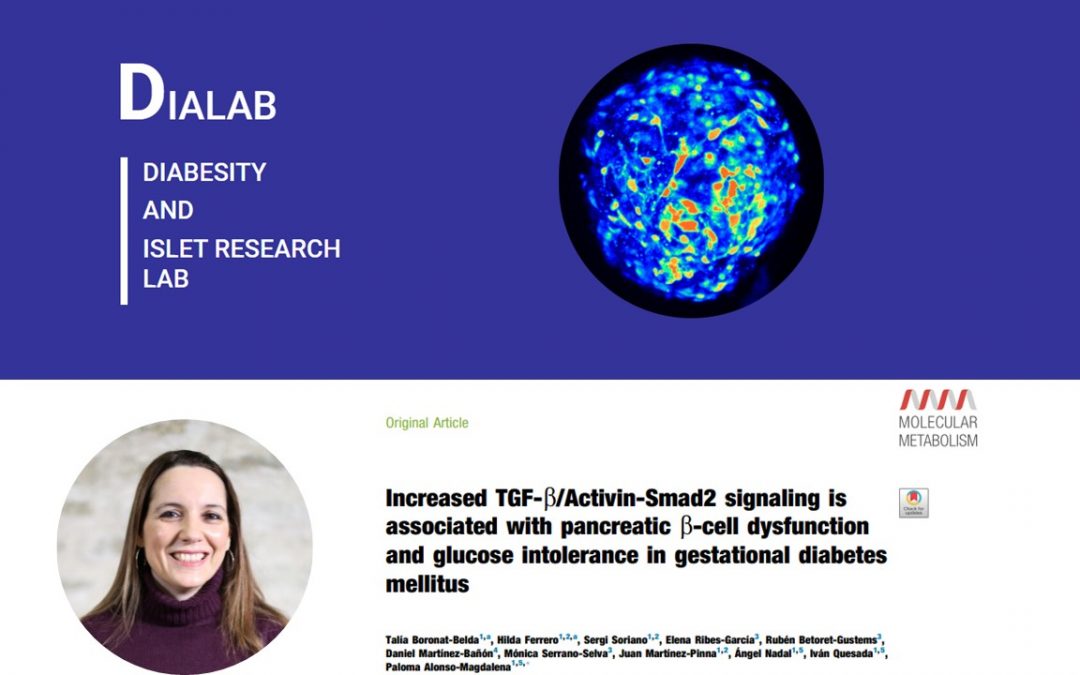
We are pleased to share the latest scientific breakthrough from the Diabesity and Islet Research Lab of the Basic Research Unit in Diabetes (IDiBE-UMH), in collaboration with the Gynecology and Obstetrics Department at Hospital Vinalopó (Elche) and the University of Alicante.
The study, led by Dr. Paloma Alonso-Magdalena, has been published in the journal Molecular Metabolism under the title:
➡️ “Increased TGF-β/Activin-Smad2 signaling is associated with pancreatic β-cell dysfunction and glucose intolerance in gestational diabetes mellitus.”
📌 What was investigated and why it matters
Gestational diabetes is the most common metabolic disorder during pregnancy. It occurs when the mother’s body does not produce enough insulin, the hormone responsible for regulating blood glucose levels.
During pregnancy, pancreatic beta cells normally increase insulin production to meet growing metabolic demands. However, in some women, this adaptation does not happen correctly.
This study addressed a key question:
“What is failing inside pancreatic cells that prevents them from adapting during pregnancy?”
🧬 The answer may involve a specific molecular pathway: the TGF-β/Activin-Smad2 pathway.
📍 Main Findings
Researchers discovered that:
-
This pathway is abnormally activated in women with gestational diabetes.
-
When this happens, pancreatic beta cells:
-
produce less insulin, and
-
have a reduced ability to grow and adapt during pregnancy.
-
The study also identifies potential circulating biomarkers, which could enable earlier detection of risk for gestational diabetes in the future—before symptoms appear.
✨ Why this matters
This discovery:
-
Helps deepen our understanding of how gestational diabetes develops.
-
Opens the door to exploring therapeutic strategies to modulate this molecular pathway.
-
Could contribute to improving metabolic health during pregnancy, benefiting both mother and baby.
🔗 More information:
https://doi.org/10.1016/j.molmet.2025.102274