
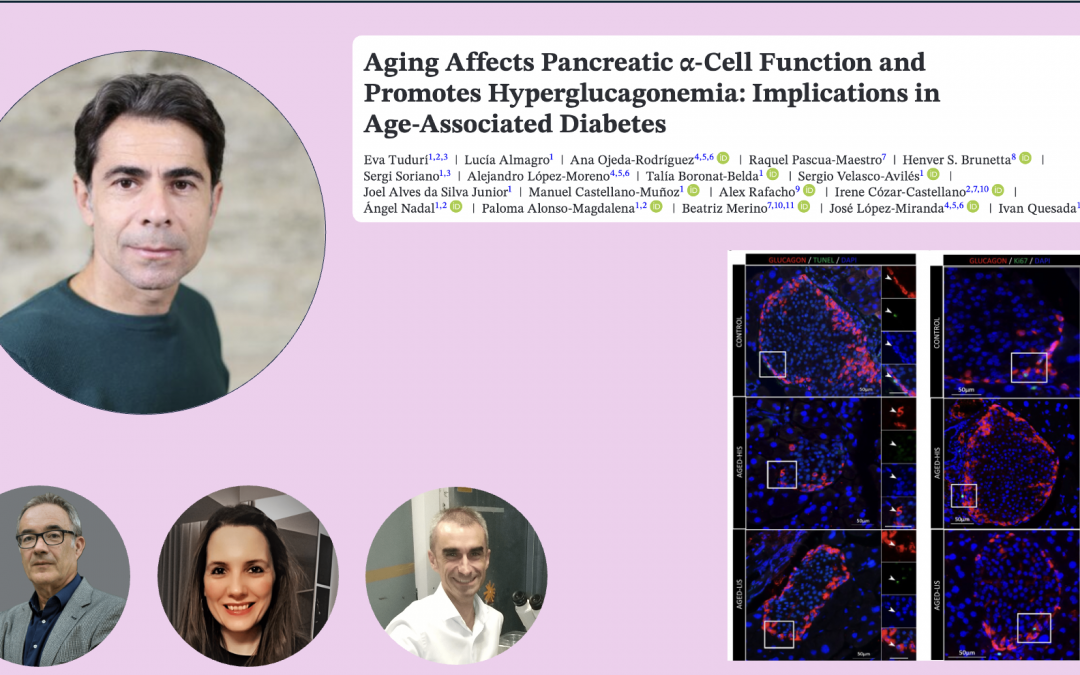
Led by Iván Quesada and published in Aging Cell, the study shows that ageing is accompanied by changes in pancreatic alpha cells and increased glucagon secretion. Clinical data from the CORDIOPREV study link higher levels of the hormone to an increased risk of type 2 diabetes in older adults.
Along with obesity, ageing is one of the main risk factors for type 2 diabetes. Research into age-related changes in the pancreas has traditionally focused on beta cells, which produce insulin. A new study turns its attention to another pancreatic cell type: alpha cells, which produce glucagon.
The research was led by Professor Iván Quesada, a researcher at the Institute for Research in Biotechnology and Health (IDiBE) of Miguel Hernández University of Elche (UMH) and CIBERDEM, the Spanish Biomedical Research Network Centre for Diabetes and Associated Metabolic Diseases. The findings expand current knowledge of how glucose regulation changes with age and of the potential role of alpha cells in the development of diabetes later in life. Glucagon is a hormone produced by pancreatic alpha cells that helps raise blood glucose levels. To examine how age affects these cells, the researchers studied an animal model of ageing. They found excess glucagon in the blood alongside molecular, structural and functional changes in alpha cells. Overall, these changes were more pronounced when insulin resistance was also present. The researchers also identified a subgroup of alpha cells showing signs of metabolic stress and a loss of cellular maturity and identity. These features may contribute to cell dysregulation and to the altered glucagon secretion observed in the model.
To assess the relevance of these findings in humans, the team examined clinical data from the CORDIOPREV study, led by Professor José López-Miranda of the University of Córdoba. Among older adults included in the study, higher glucagon levels were associated with an increased risk of developing type 2 diabetes. This clinical association complements the results obtained in the animal model. Taken together, the findings indicate that ageing may affect both circulating glucagon levels and the condition and function of the cells that produce it. The study identifies alpha cells and glucagon as potential targets for future research into ways to prevent and treat age-associated diabetes. Further studies will be needed to determine how these findings could inform clinical interventions. The research was carried out by UMH’s Diabesity and Islet Research Lab of the Basic Diabetes Research Unit at the in collaboration with teams from institutions in Spain, Brazil and Sweden. IDiBE researchers who contributed to the study include Paloma Alonso-Magdalena, Ángel Nadal, Joel Alves da Silva Junior, Sergio Velasco Avilés, Talía Boronat Belda, Lucía Almagro Ruz, Eva Tudurí, Sergi Soriano and Manuel Castellano Muñoz.
The results have been published in Aging Cell under the title “Aging Affects Pancreatic α-Cell Function and Promotes Hyperglucagonemia: Implications in Age-Associated Diabetes.”
Reference: Tudurí E. et al. Aging Cell. 2026;25(10). DOI: 10.1111/acel.70753.