
A Cold Sensor Key to Migraine and Emotional Regulation
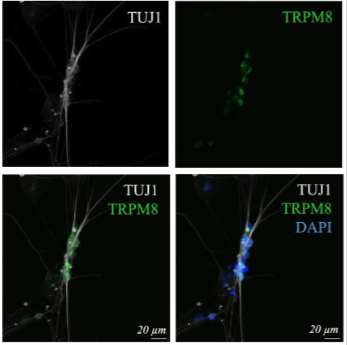
An international study led by our Institute for Research, Development and Innovation has identified a fundamental role of the TRPM8 receptor—known for detecting cold—in pain control and the emotional symptoms associated with migraine. Our researchers, David Cabañero, Asia Fernández, and Antonio Ferrer, in collaboration with the University of Granada and the University of Bath (UK), have shown that this thermal sensor also regulates impulsivity, anxiety, and depressive symptoms.
Using animal models and an artificial intelligence algorithm to detect facial expressions of pain, they found that the absence of TRPM8 increases vulnerability to these emotional alterations.
Furthermore, the team discovered that this receptor is activated not only by cold or menthol, but also by testosterone and rapamycin, which could explain sex-related differences and open new therapeutic avenues. At low doses, rapamycin relieved pain in migraine models, although it had no emotional effects due to its limited action in the brain.
Published in The Journal of Headache and Pain, the study proposes TRPM8 as a promising target for treatments that address both pain and emotional symptoms of migraine, particularly relevant in women.